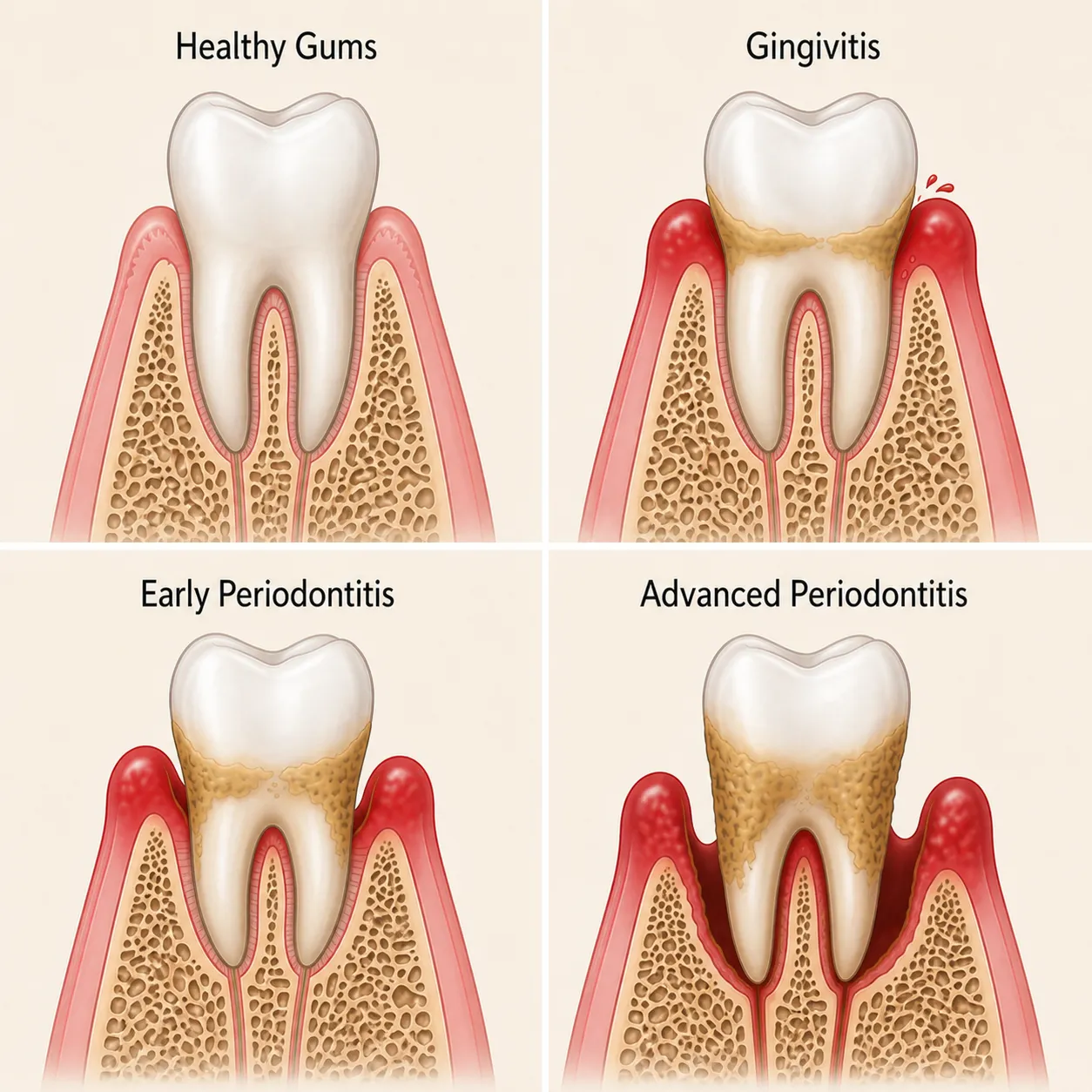
What is periodontitis?
Periodontitis is an inflammatory disease that affects the tissues supporting the teeth: the gums, the periodontal ligament and the alveolar bone. It usually begins as gingivitis, meaning inflammation of the gums, and can progress to destruction of the bone around the teeth.
The main cause is bacterial plaque that accumulates around the teeth when oral hygiene is not adequate. The condition is aggravated by factors such as smoking, heredity, stress, pregnancy, teeth grinding, diabetes mellitus and osteoporosis.
Periodontitis is one of the leading causes of tooth loss in adults. As it progresses, the bone supporting the teeth is gradually destroyed, the teeth may begin to move and, without treatment, they may eventually be lost.
Periodontitis and general health
Gum health is connected to general health. Studies have associated periodontitis with conditions such as diabetes mellitus, cardiovascular disease, respiratory infections and an increased risk of premature or low-birth-weight babies.
This does not mean that every patient with periodontitis will develop one of these problems. It does show, however, that caring for the gums is not only about the mouth, but also part of overall health care.
Basic prevention guidelines
1. Replace your toothbrush
Your toothbrush should be replaced approximately every 3 months or earlier if the bristles are worn.
2. Clean between your teeth every day
Dental floss or interdental brushes help remove bacterial plaque from areas that the toothbrush cannot easily reach.
3. Schedule regular cleaning and examination
A dental visit every 6 months for cleaning and gum examination helps detect gingivitis or periodontitis early. Patients with a history of periodontitis may need more frequent follow-up visits.
Periodontitis treatment
Early stage
In the early stage, treatment includes professional dental cleaning and detailed instructions for correct brushing, flossing or the use of interdental brushes.
Root planing
When periodontitis has progressed, plaque and calculus must be removed from the periodontal pockets under the gums. This procedure is called root planing and is performed with special instruments and ultrasonic devices. Local anaesthesia is usually used so that the patient does not feel pain.
Periodontal surgery
In severe cases, surgical treatment may be required. The periodontist gains access to the deep pockets in order to remove bacteria, calculus and inflamed tissue from areas that cannot be cleaned adequately with non-surgical treatment.
Each procedure is performed under local anaesthesia. Sutures are placed and are usually removed after about one week. The number of sessions depends on the extent and severity of the disease.
Tissue regeneration
In selected cases, the periodontist may attempt to regenerate the bone that has been destroyed around the teeth. Special collagen membranes and bone grafts are used with the aim of restoring part of the lost support.
Why is follow-up necessary?
Periodontitis is a chronic disease and can recur. If proper oral hygiene and regular professional monitoring stop, periodontal pockets may form again and bone loss may continue.
For this reason, after treatment is completed, a maintenance program with regular follow-up visits, professional cleaning and personalised oral hygiene instructions is necessary.